Environmental Impacts- BP Oil Spill
Application Assignment #1
2010 BP Oil Spill
 |
| Deepwater Horizon Oil Rig Explosion in 2010, photo by US Coast Guard |
For my assignment I chose to read about the 2010 oil spill in the Gulf Coast. The article, “Thirty Million Gallons Under the Sea: Following the trail of BP’s oil in the Gulf of Mexico” by Antonia Juhasz, discussed the long term environmental impacts it has left. The Gulf of Mexico is home to a large amount of oil and natural gas lease blocks. According to the article by Juhasz, it is estimated that over 17 percent of oil in the US comes from the Gulf and of that, a whopping 80 percent comes from depths of 1,000 feet or more below the ocean’s surface. This drilling into the ocean’s floor is what led to the BP oil spill. BP had leased a large amount of land in the Gulf Coast and was using it to drill wells for oil. There was an extensive amount of steel piping under the ocean floor that was being used to transport the oil. In April of 2010 methane gas escaped from the pipes into the Deepwater Horizon rig. A couple of sparks from inside the rig was all it took before explosions started occurring and oil started leaking from the underwater pipes.
The constant oil leaking into the ocean has caused extreme impacts on the environment and to the organisms that live there. Juhasz’s article states that it is currently estimated that 134 million gallons of oil leaked into the ocean. Of that 134 million, about 30 million gallons still remain in Gulf; half of that laying on the ocean floor. So much oil has had a huge impact of the organisms that reside here. Phytoplankton are one of the species at a huge risk. This is concerning since phytoplankton provide more than half the earth’s oxygen. Many other species rely on these small organisms for survival which is throwing the natural food chain off balance. Oysters are another example of the dangerous impacts of the oil spill. Oysters harvested in the US have gone from 60 percent down to only 40 percent. Coral reefs have also been seen dying on the ocean floor, which is where a lot of the oil is sitting. Besides the organisms that reside on the ocean floor, many other well-loved species are being harmed. This article written in 2015 states that by May of 2011 the BP oil spill had killed over 100,000 Gulf animals including 28,500 sea turtles, 82,000 birds, and at least 26,000 other marine animals. It is clear after reading this article that the 2010 BP oil spill has devasted the environment of the Gulf and the many species living there.
There are also many impacts on human health as a result of the spill. The author of the article states that is has been found “that crude-oil contamination can lead to cancer, birth defects, dementia, and other developmental and neurological disorders”. As a part of the medical benefits settlement BP agreed too, 12,144 health claims were made in 2014, with only 1,304 approved for payments.
Something that really resonated with me from the article is how the author described the lack of awareness of this problem. As stated by the author “the oil industry would like us to believe that it has corrected the problems that led to the Deepwater Horizon disaster, but in June of last year, the U.S. Chemical Safety Board, an independent agency established by Congress to investigate industrial incidents, released a report indicating that another “catastrophic accident” remains possible”. I think this is very important for people to hear and understand. I think a lot of people believe that the BP oil spill was just a random mistake and that it won’t happen again. I believe it is terrifying to know that big oil corporations are still drilling deep into the ocean floor without any changes being made since the BP incident. According to another source, it is estimated that there are over 4,000 production platforms and drilling rigs off the coast of Louisiana. I think this speaks to how people and these oil businesses care more about getting more oil and money than they do about protecting the environment around them.
I also think it is extremely sad that so many innocent animals have been devasted by this oil spill, yet there aren’t enough changes being made, according to the original article, to prevent this sort of thing from happening again. This article really made me question exactly how much the general population knows about the effects the oil spill has caused to the environment, and even their own health! I wonder if people are aware of the increase in dolphin deaths in the Gulf of Mexico since the spill. Dolphins used to average 63 deaths a year, but that jumped to 125 just seven months after the spill as reported by Smithsonian Ocean. Many animals were and still are affected by this spill and it is very sad people are beginning to make the same mistakes as before.
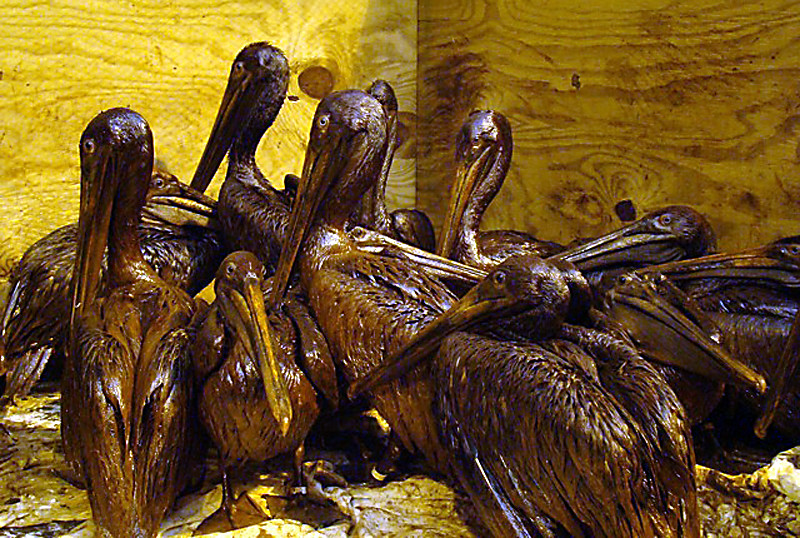 |
| Pelicans covered in oil, waiting to be cleaned, as a result of the BP oil spill, image taken by International Bird Rescue Research Center found on Flickr |
After reading the article about the 2010 BP oil spill I feel much more aware of what happened and how this affected our planet. I hope more efforts are made soon to ensure that this sort of thing never happens again because our ecosystems and environment are the things at stake here.
 |
| Picture of plastic littered all over a beach, photo by Wikimedia |
After reading the article about the BP oil spill and its impacts on the environment, it reminded me a lot of our problem with plastics. In class we talked a lot about plastics and how they have a negative effect on our environment. Similar to our use of oil, we are obsessed with our plastics. Adela Fowler even reports in her SlideShare that the annual plastic use per person in the US is 176 pounds. As a country we use plastic for all sorts of purposes which is similar to our use of oil as it can be used for many different purposes. The difference between our use of oil and use of plastic is how we get rid of our plastics. Oils we will use till the last drop, but for the most part plastics are used once and then thrown away. According to a National Geographic article by Laura Parker, only 9 percent of plastics are recycled. This means the majority of plastics are sitting in landfills or polluting our environment.
There are many similarities between the impacts of plastics and oil. As discussed before, the BP oil spill is still causing devastation to the Gulf Coast. It has killed over 100,000 animal species and it has caused a huge amount of pollution to the ocean. Plastics are not much different. A lot of plastics end up in our ocean causing harm to its animals. Max Liboiron’s article suggests that there is approximately 315 billion pounds of plastic in the ocean. Plastics kill animals when the animals become entangled it in or when the ingest it.
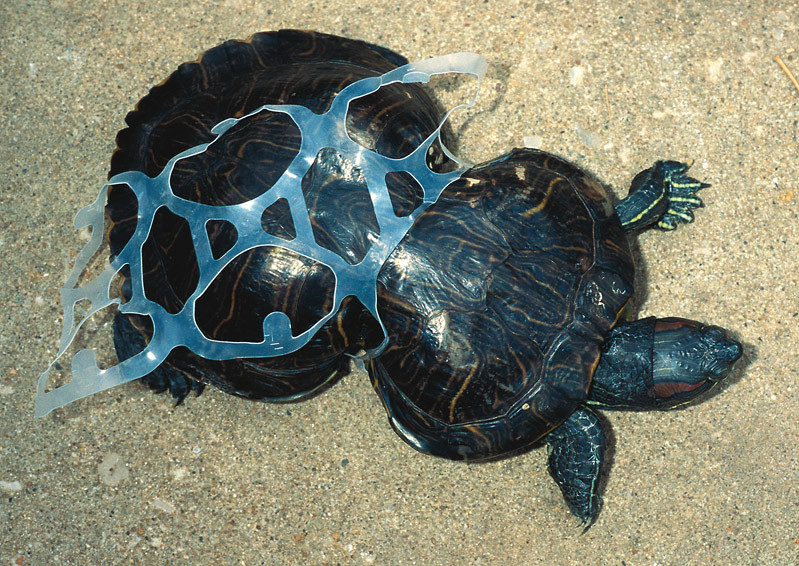 |
| Turtle entangled in plastic that was littered, photo by Stefan Leijonfrom Flickr |
Animals ingesting plastic has become such a huge issue that Liboiron’s article states “plastic has been found in the stomachs of ½ the world’s seabirds, marine mammals, all sea turtle species, even in the blood of mussels”. Plastic is even ingested by the some of the smallest organisms in the ocean. When plastic breaks down into its smaller particles, it is mistaken as food by plankton which will then effect the rest of the food chain.
Our use of oil and our use of plastics both seem to be used somewhat carelessly and have major environmental and health impacts.
Even though Keene is small compared to the rest of the world, we still very involved in the industries mentioned above. Oil is used for many different purposes, but one main one is for fueling cars. A majority of students on campus drive cars which need oil and therefor they are contributing to the oil industry. One way people in Keene could help limit the environmental impacts discussed related to oil is to stop driving cars that use oil for fuel. While swearing off cars for good isn’t entirely practical for most people in Keene, simply deciding to walk or ride a bike more is a start. This could cut down the amount of oil we use as a community and every bit of oil saved counts!
 |
| Wide variety of reusable water bottles available to people, photo from Wikimedia |
When it comes to the use of plastics, Keene is not too environmentally conscious. Plastic is used regularly on campus whether it be plastic water bottles at Hoot and Scoot or all the plastic bags given out at Lloyds Marketplace. A lot of the plastic consumed in Keene can also be seen littered around campus. It isn’t very rare that I pass a plastic bag or water bottle on my way to class each day. One huge way Keene could help limit the environmental impact of plastic is to stop using it. Investing in a reusable water bottle is cheaper and better for the environment. Another way to help is to recycle and dispose of plastics properly. There are many recycling bins across campus that should be put to good use. If people at Keene become more aware of the ways in which they can stop the negative impacts their consumption is causing, we might be able to start a change, but this is only possible through taking action.
 |
| Picture taken by me of the recycling bins available to use on campus |
ReplyDeleteI enjoyed reading your blog post a lot because I decided to read about the BP oil spill as well so I enjoyed reading your opinion on this situation. I enjoyed reading about which part of the article resonated with you the most because I have the same beliefs. Also, I agree that oil businesses care about making money than how they are affecting the environment around them. From your post, I learned that the annual plastic use per person in the United States is 176 pounds. This shocks me because I believe that the plastic use in the United States needs to be drawn to attention since it is affecting the environment tremendously. For an additional solution to the impact you wrote about I would suggest carpooling because it limits the oil use in cars.
I really like your blog post! I really liked that you made headings in your post (not a lot of people did this) This makes it a lot easier to navigate and pick where I need to read. I also really like that you put some statistics in there and your pictures are really good as well. The pictures give it that emotional push for people to be upset about the problem and want to take action. In your post you put the "what resonated with me" and that's what I learned from your post is that the oil spill is greatly pushed under the rug here and majority of people don't even know that it didn't get cleaned up it's still a huge issue. For an additional solution for this would probably just be making campus more aware of the problem with oil and how it impacts our environment.
ReplyDeleteNice Post! I also read the article on the BP oil spill. I liked a lot of what you wrote in your post because you related a lot of the facts from the article to back up your position on oil. I liked how you compared oil use with plastic use in your second paragraph because that is a huge problem on campus, like you talked about.
ReplyDeleteI learned more about oil and the amount of plastic in our environment from your post. It was interesting how you add the pictures of the pelicans waiting to get cleaned from the spill because I didn't know that there were people to help clean the marine animals that were affected by it.
A suggestion for another solution to bringing the topic to Keene and our campus, to not only have recycling bins there for people to recycle, but to stop the availability of plastic to begin with. Not even half of the plastic put into recycling bins gets recycled because of the toxic chemicals in it that cannot be fully broken down.
Super interesting post, nice job!